
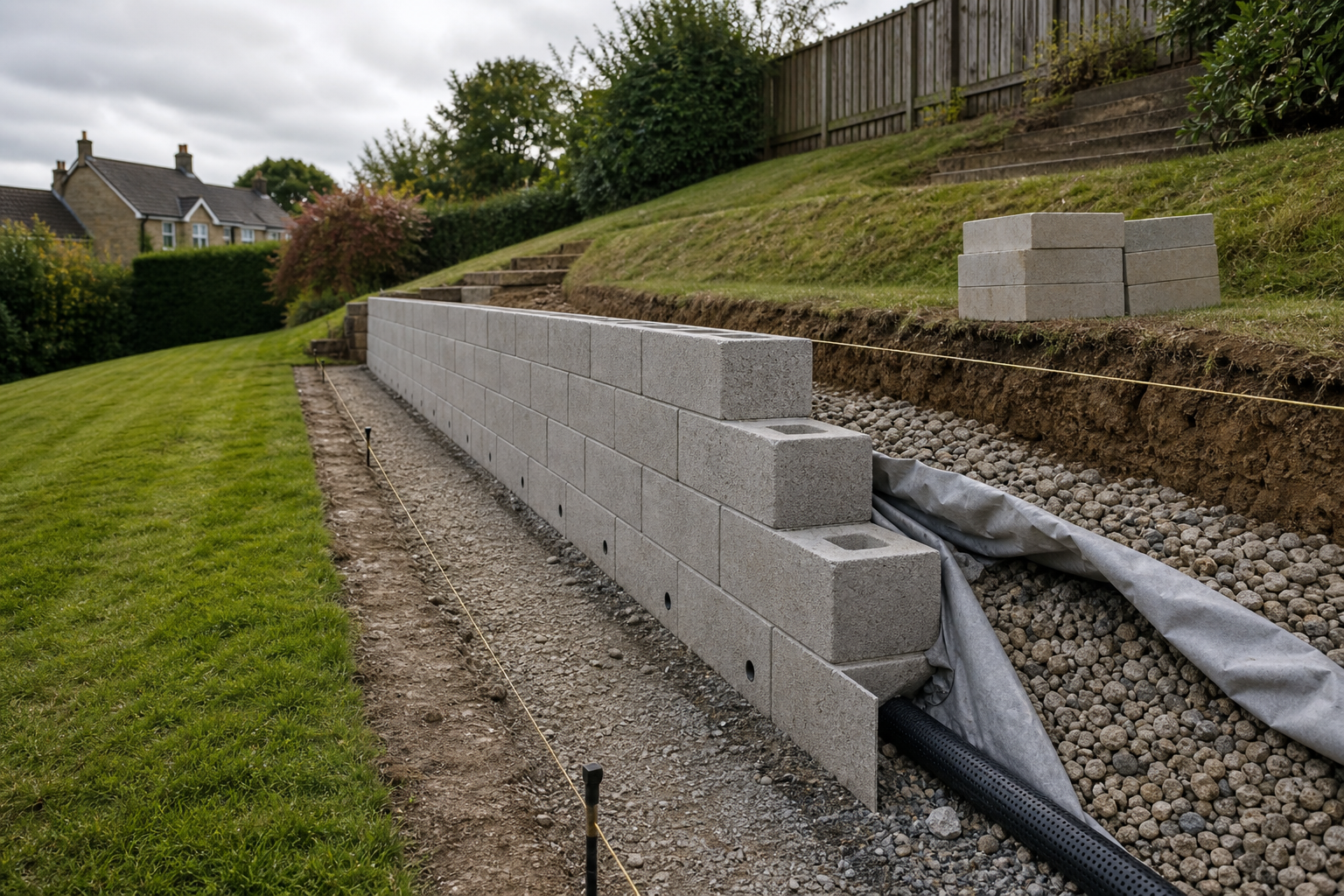
What helps a retaining wall do its job
Ground levels checked properly
Measuring the slope early helps us judge build method, height and wall loading.
Drainage built into the plan
Water pressure is considered from the start, not left as an afterthought.
Finish matched to the space
The wall can still look right while doing a structurally demanding job.
Hold back ground and create usable levels
A retaining wall has a bigger job than a standard garden wall. It has to hold back soil, cope with water pressure and help turn awkward ground into a space you can actually use. At CB Brickwork & Construction Ltd, we build retaining walls around Dudley for sloped gardens, raised beds and level changes where strength and drainage are vital.
We assess the ground, the height of the wall, signs of failure in any existing structure and how the finished wall should look against the rest of the property. Practical design matters because appearance means little if the wall cannot cope with the load behind it.
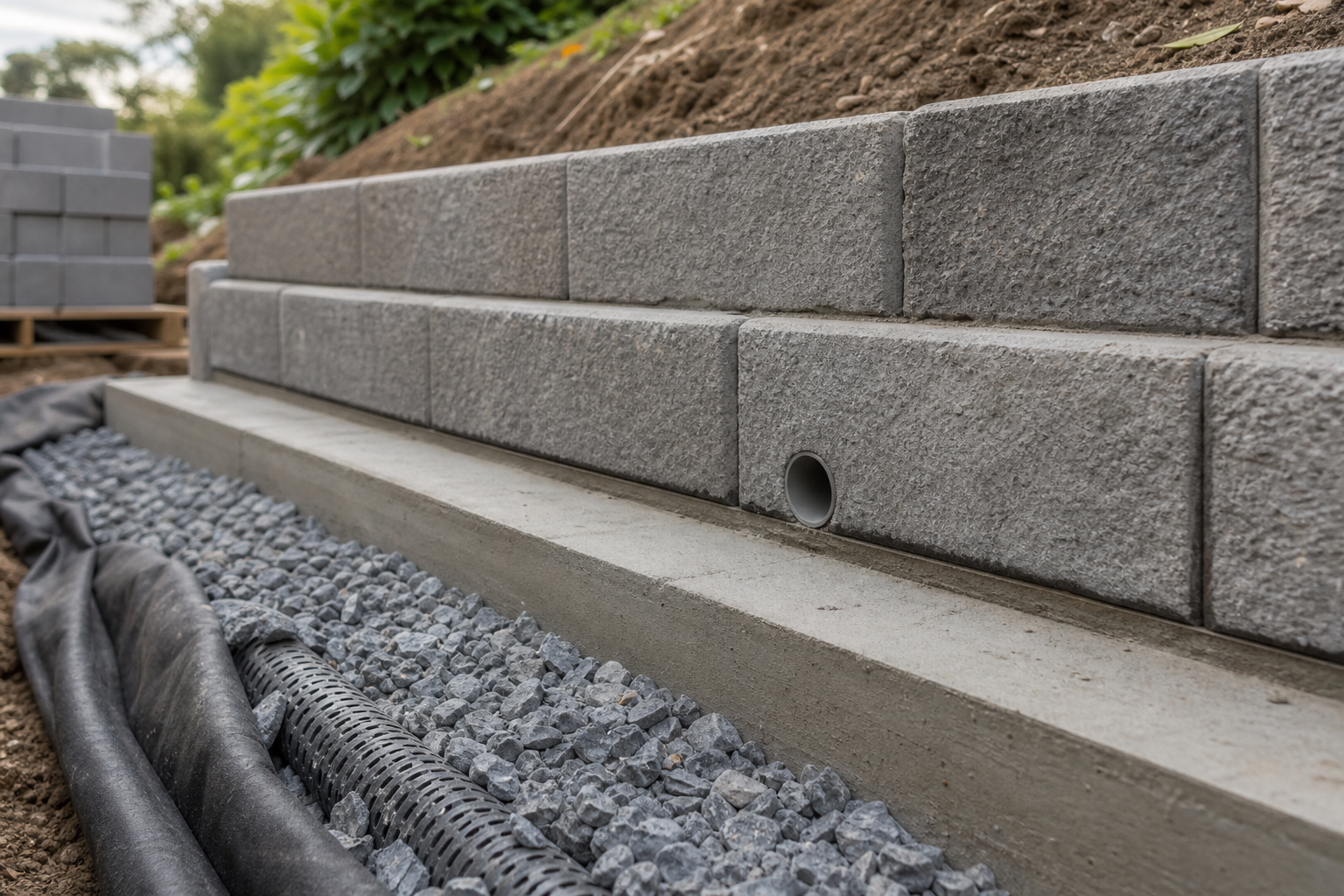
Drainage and build detail are central here
Retaining wall work needs more than straight brickwork. With CB Brickwork & Construction Ltd, we think carefully about foundations, wall thickness, top finishing and especially how water will escape from behind the wall.
Weep holes, drainage provision and sound build up all help reduce pressure that can lead to bulging or failure later. Before we quote, it helps if you can share rough wall length and height, photos of the slope and notes on access, because those details affect feasibility, labour and the best approach on site.
Frequently asked questions
How do I know if I need a retaining wall?
Bulging masonry, leaning walls, soil slipping, crumbling sections and poor drainage around a level change are common warning signs. If the aim is to hold back earth or create a flat usable area, a retaining wall is often the safer and more practical answer than a standard wall build.
Why does drainage matter so much in a retaining wall?
Water trapped behind the wall adds pressure that can push the structure forward over time. Planning proper drainage and release points helps the wall cope better with wet conditions and reduces the risk of movement, cracking or complete failure later on.
What should I send for a retaining wall quote?
Photos of the slope or failed wall, approximate length and height, access details and the finish you want all help. If the wall is replacing an existing structure, that is worth mentioning too, as it affects removal work, ground preparation and the likely build method.